The history of sucuk: from the steppes of Central Asia to breakfast tables everywhere
Where sucuk comes from, how the word travelled with the Ottomans into a dozen languages, and why this spiced sausage carries a thousand years of history.
A thousand-year journey, from nomadic riders on the Central Asian steppe to the sultans’ kitchens in Constantinople, and on to kitchen counters in Norway today.
What is sucuk?
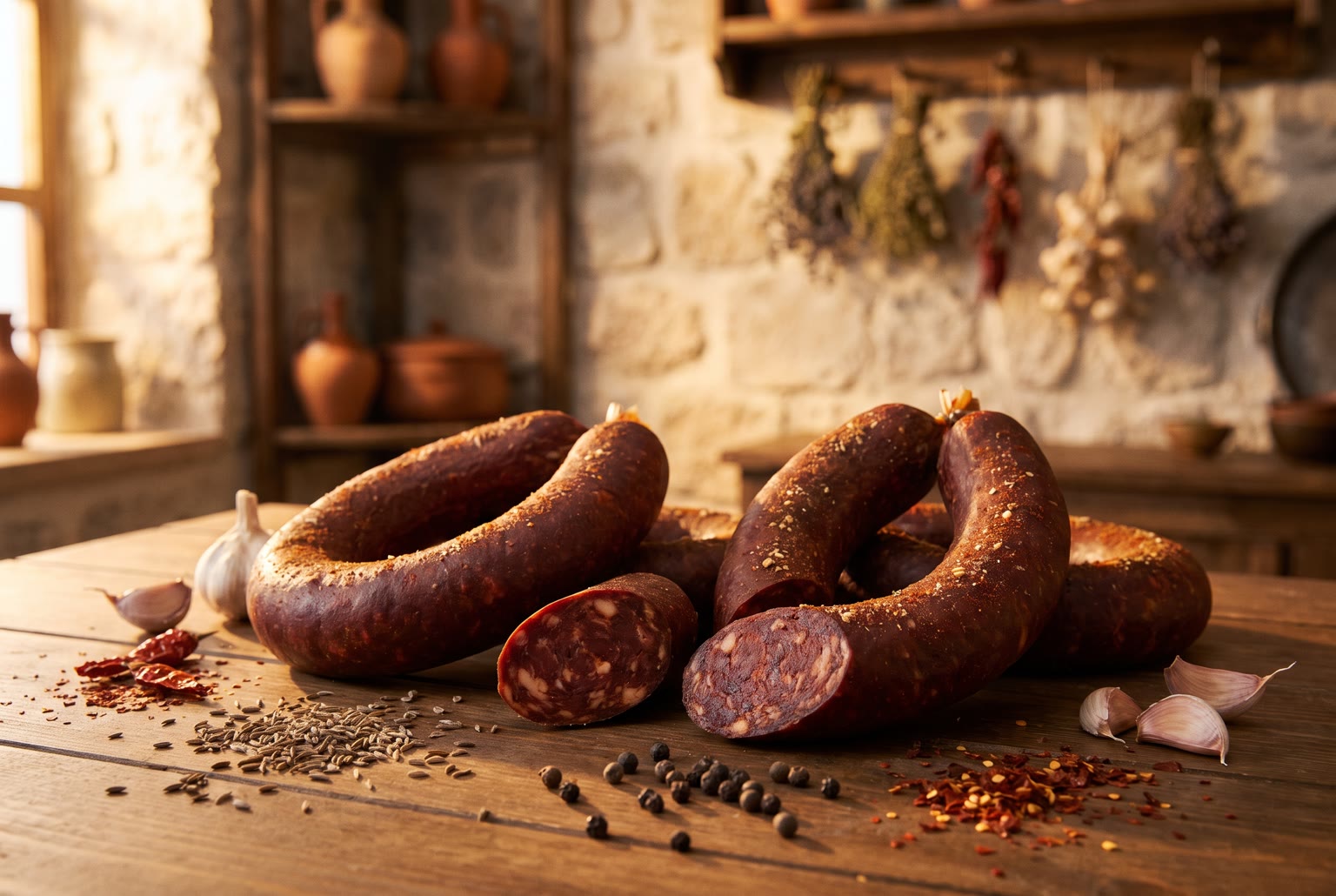
Sucuk is a dried, fermented, heavily spiced sausage. It’s usually made from beef, sometimes with a little lamb mixed in. Garlic and cumin drive the flavour, paprika gives it that red-orange colour, and the texture is dense and firm.
You could compare it to chorizo at a glance, but the similarity ends quickly. Chorizo is pork and leans on smoked paprika. Sucuk is beef, and its spice blend is closer to what you’d recognise from tacos.
In Norway, sucuk is still mostly found in kitchens with Turkish, Balkan or Middle Eastern roots. But over the past few years it has started turning up on restaurant menus and grocery shelves too. What follows is the part most people don’t expect: how it got here is a much longer and stranger story than it looks.
1. Where the word comes from
“Sucuk” doesn’t come from Arabic, Greek or Latin. It’s an old Turkic word.
It traces back to Old Turkic suğut. The root suɣur- means to dry or to drain, and the ending -çuk is a diminutive. So the literal sense is something like “a small dried thing.” Over time suɣutçuk wore down into sucuk.
The oldest written record we have is from the 11th century. In his Dîwân Lughât al-Turk, an early dictionary of the Turkic languages, the scholar Mahmud al-Kashgari describes it as spiced ground meat stuffed into casing.
So both the word and the food are Turkish. The occasional claim that it started as a Balkan word doesn’t hold up.
2. A solution born on the steppe
To understand why sucuk exists at all, it helps to picture what life on the Eurasian steppe actually involved a thousand years ago.
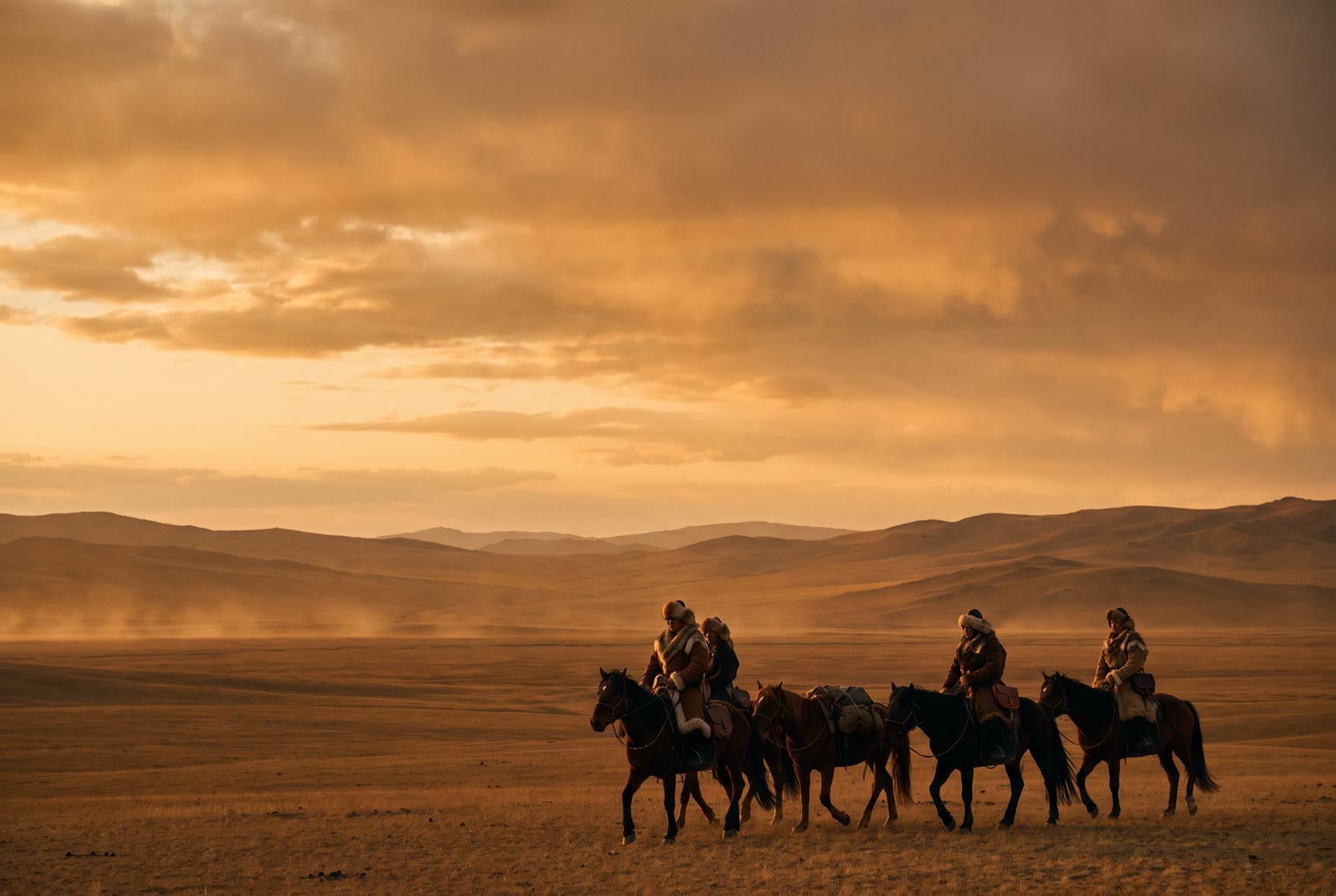
The nomadic peoples who became today’s Turks, Azerbaijanis, Kazakhs and Kyrgyz lived off cattle and horses. They moved with the seasons across enormous distances, from Mongolia and the Altai Mountains to the steppes of what is now Kazakhstan and Kyrgyzstan. Meat was plentiful in summer and autumn. The real problem was carrying it through winter and over long journeys.
They found two ways to keep meat without refrigeration:
- Press it and dry it in the air. That became pastırma.
- Spice it, ferment it and dry it in casing. That became sucuk.
The clever part of both was letting the spices do the preserving. Cumin and black pepper slow bacterial growth. Garlic is naturally antibacterial. Fermentation drops the pH, which protects the meat and gives sucuk its slightly tangy signature taste.
The paprika that gives sucuk its colour today joined the recipe much later. Capsicum peppers come from the Americas and only reached Anatolian kitchens in the 16th and 17th centuries. The earliest sucuk made on the steppe was nowhere near as red as the one we know now.
This knowledge travelled west with the Turkic peoples. It was well established in Anatolia long before the Ottoman Empire was founded in the 14th century.
3. Sucuk in the Ottoman kitchen
As the Ottomans grew from a small principality in northwestern Anatolia into an empire reaching from the Balkans to the Middle East, sucuk became food for the army, the court and everyone in between.
The word spread with it. That it passed into so many regional languages almost unchanged is the linguistic fingerprint of that expansion:
| Language | Word for sucuk |
|---|---|
| Turkish | sucuk |
| Arabic | sujuq (سُجُق) |
| Greek | soutzouki (σουτζούκι) |
| Bulgarian | sudzhuk (суджук) |
| Bosnian / Serbian / Croatian | sudžuk |
| Albanian | suxhuk |
| Kazakh | shujyq (шұжық) |
| Kyrgyz | chuchuk (чучук) |
| Romanian | sugiuc / ghiuden |
On the Ottoman table sucuk was never a delicacy. It was fried for breakfast, dropped into bean stews, tucked into pastries and pide. It was simply everyday food.
4. The mark it left on the Balkans
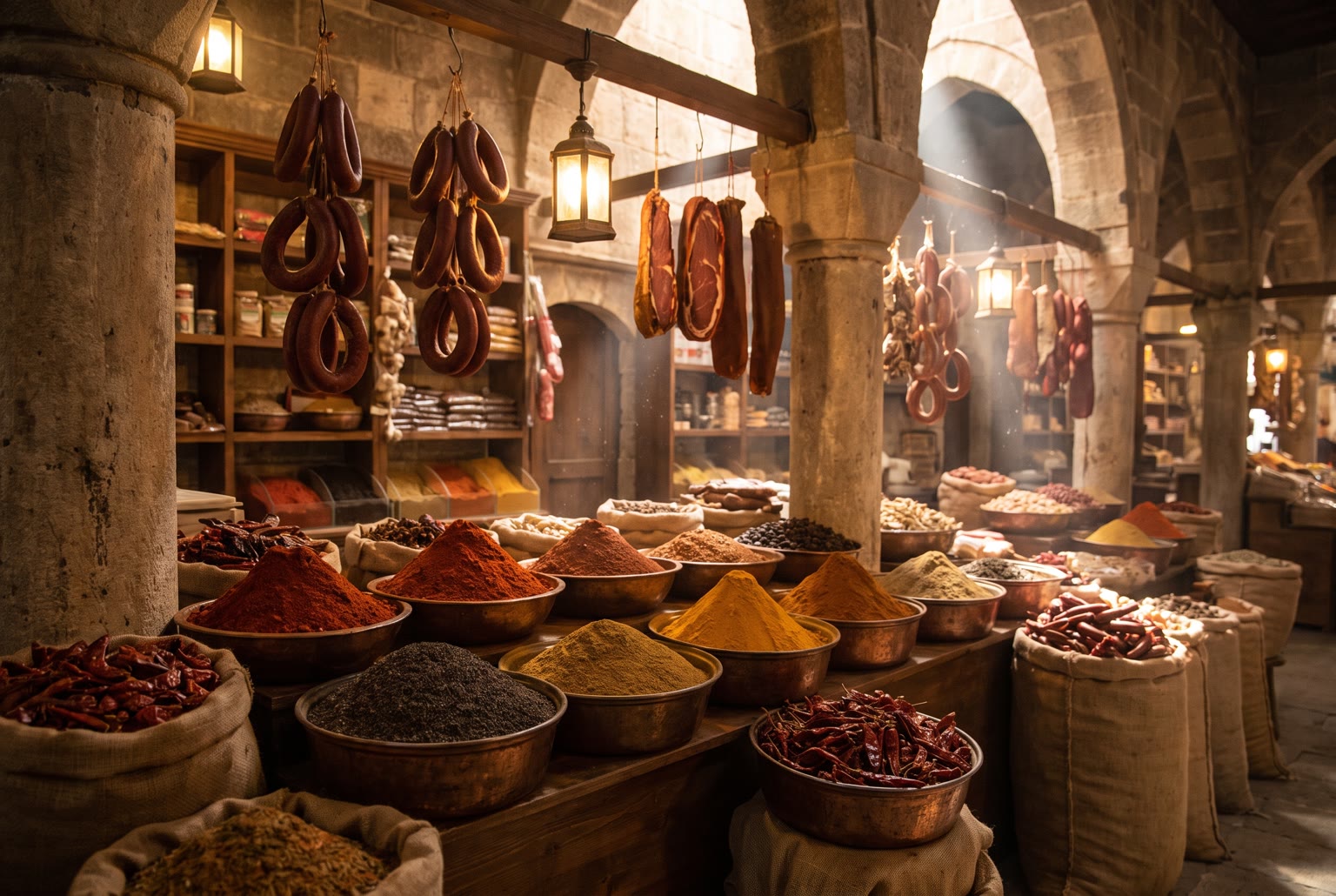
When the Ottomans settled the Balkans in the 14th and 15th centuries, sucuk went with them into the kitchens of Bulgaria, Greece, Bosnia, Albania and North Macedonia. Each country reworked it around local ingredients and tastes:
- Bulgaria. Lukanka and sudzhuk are relatives, though lukanka, the country’s best-known fermented sausage, is softer and more mildly spiced.
- Greece. Soutzouki from Smyrna is both a dried sausage and the name behind Smyrna-style meatballs in sauce. Soutzoukakia literally means “little sucuk.”
- Bosnia. Sudžuk is dense, spiced and often smoked. You’ll find it in almost any grocery store.
- Albania, Kosovo, North Macedonia. Here suxhuk usually refers to homemade versions that shift from region to region.
That these variants took hold says a lot about how deeply Ottoman cooking settled into the region. Under the Balkan dishes now filed as “European cuisine” there’s a thick Turkish layer. Sucuk is far from the only example: yogurt, börek, baklava, sarma and pilav travelled the same road.
5. Three sucuk cities: Afyonkarahisar, Kayseri, Tokat
No single city owns sucuk in Turkey. Three names keep coming up, on labels and in the geographical indication registry: Afyonkarahisar, Kayseri and Tokat. Each has its own tradition and its own balance of spice.
Afyonkarahisar is treated as the benchmark. Known for its thermal springs and marble, the city built its sucuk reputation on tightly controlled fat content, generous spicing and fermentation that isn’t rushed. Afyon Sucuğu received EU geographical indication protection in 2021.
Kayseri is sucuk’s historical home. Writing in the 17th century, the traveller Evliya Çelebi noted that the city’s cumin-scented sucuk was sent to Istanbul as a gift. The dry autumn air coming off Mount Erciyes is close to ideal for fermentation: warm days, cold nights. Its famous finger-thick “parmak sucuk” was registered in 2002.
Tokat is the outlier. There the meat isn’t stuffed into casing at all but sewn into a piece of cotton cloth, which is where the name bez sucuk comes from. During maturing it’s rolled flat. The practice goes back more than a century and was officially registered in 2022.
If you see one of those three names on a label, it’s usually a good sign. These cities still set the standard in Turkey.
6. How sucuk is made
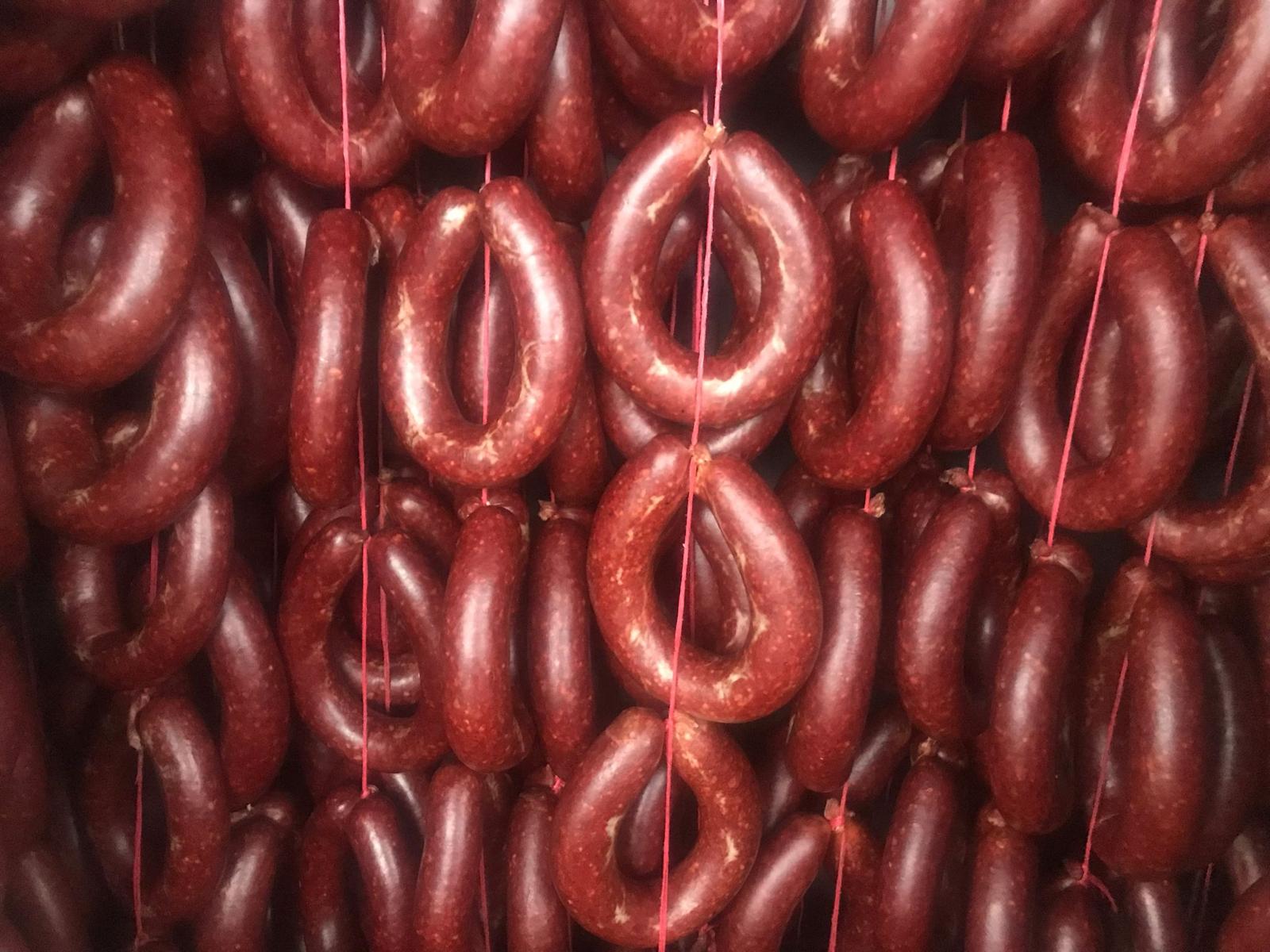
Production follows a sequence that has barely changed in a hundred years:
- Grinding and measuring. Beef, or a beef and lamb mix, is coarsely ground and checked for fat content.
- Salting. The meat rests, chilled, for several hours.
- Spicing and fermentation. Garlic, cumin, black pepper, paprika and sometimes fenugreek go in.
- Stuffing. The mixture is filled into casing and tied off into portions.
- Maturing and drying. The sausages hang until they reach the firmness you want, often for weeks.
7. Sucuk in everyday life
Finding real, traditionally made sucuk in Norway still isn’t easy. Most of what reaches the shelf is imported: it has travelled a long way, sat in storage, and left its freshness somewhere along the route.
That gap is why Atasucuk exists. Real, fully fermented sucuk made in Norway with fresh ingredients, at a price that makes sense.
So how do you cook it? The rule is simple:
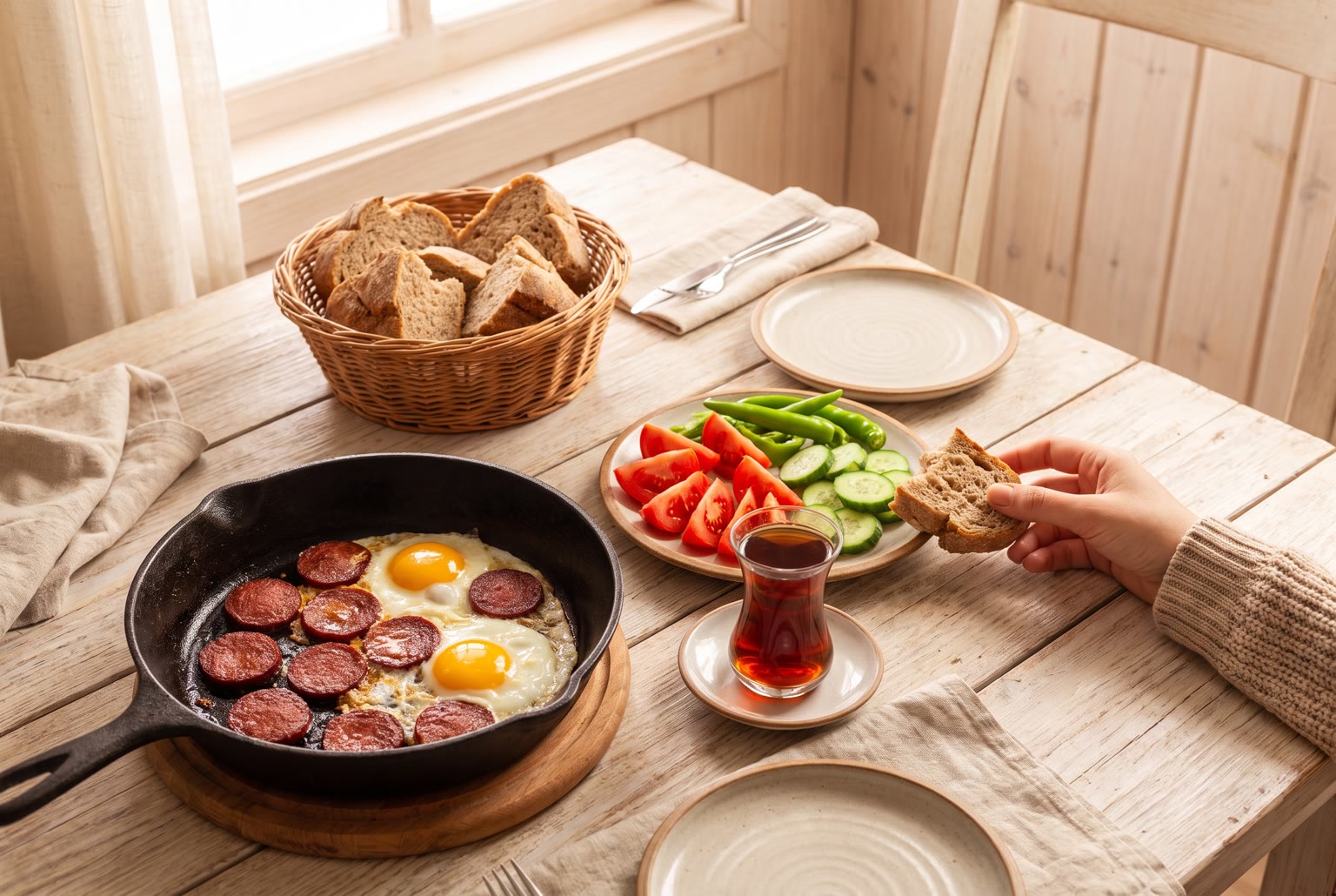
- Don’t oil the pan. Lay the slices in cold and dry.
- Keep the heat medium. You want the fat to render slowly, not the spices to scorch.
- One to two minutes a side. It’s ready when the edges crisp and turn golden.
- Use the fat left behind. Fry your eggs, tomato or bread straight in it. That’s the whole point.
Fresh simit works well, but on a Norwegian table grovbrød, knekkebrød or lefse do the job just as nicely. Add a slice of gulost, with tomato and cucumber on the side. Drink tea or coffee with it, whichever you’re used to.
8. A quick note on spelling
Most people meeting the word for the first time wonder which spelling is right:
- sucuk, the standard Turkish form
- sujuk, the English and Greek spelling
- sudjuk, sudžuk, sudzhuk, the Balkan variants
- soutzouki in Greek, with soutzoukakia being the meatballs whose name means “little sucuk”
9. Why it’s more than a sausage
Sucuk is a small, spiced piece of evidence for how much has moved across Eurasia and Anatolia over the last thousand years:
- It started with nomads in Central Asia
- It spread with the Ottomans into the Balkans and the Middle East
- It moved to Western Europe with 20th-century labour migration
- It reached Norwegian kitchens
Slice a piece into a hot pan and you’re putting a thousand years of accumulated practice on your breakfast table.
That connection is what interests us at Atasucuk: tradition, quality, and ordinary life in a new country.
Sources
- Wikipedia, Sujuk
- Mahmud al-Kashgari, Dîwân Lughât al-Turk (1072-1074)
If you enjoyed this, stick around. We’ll keep writing about Turkish food traditions. And if you want to hear first when Atasucuk launches, join the waitlist.